
Project types
Write a screenplay by voice
5 min read
A screenplay is mostly talking anyway, so why not write it by talking? MakeVox has a screenplay project type built for the format, where you speak scenes into existence and shape them the same hands-free way you write prose.
Start a screenplay project
Choose the screenplay project type when you create your project. The workspace adapts to the format, so your scenes, sluglines, action, and dialogue are laid out the way a script should be rather than as plain paragraphs.
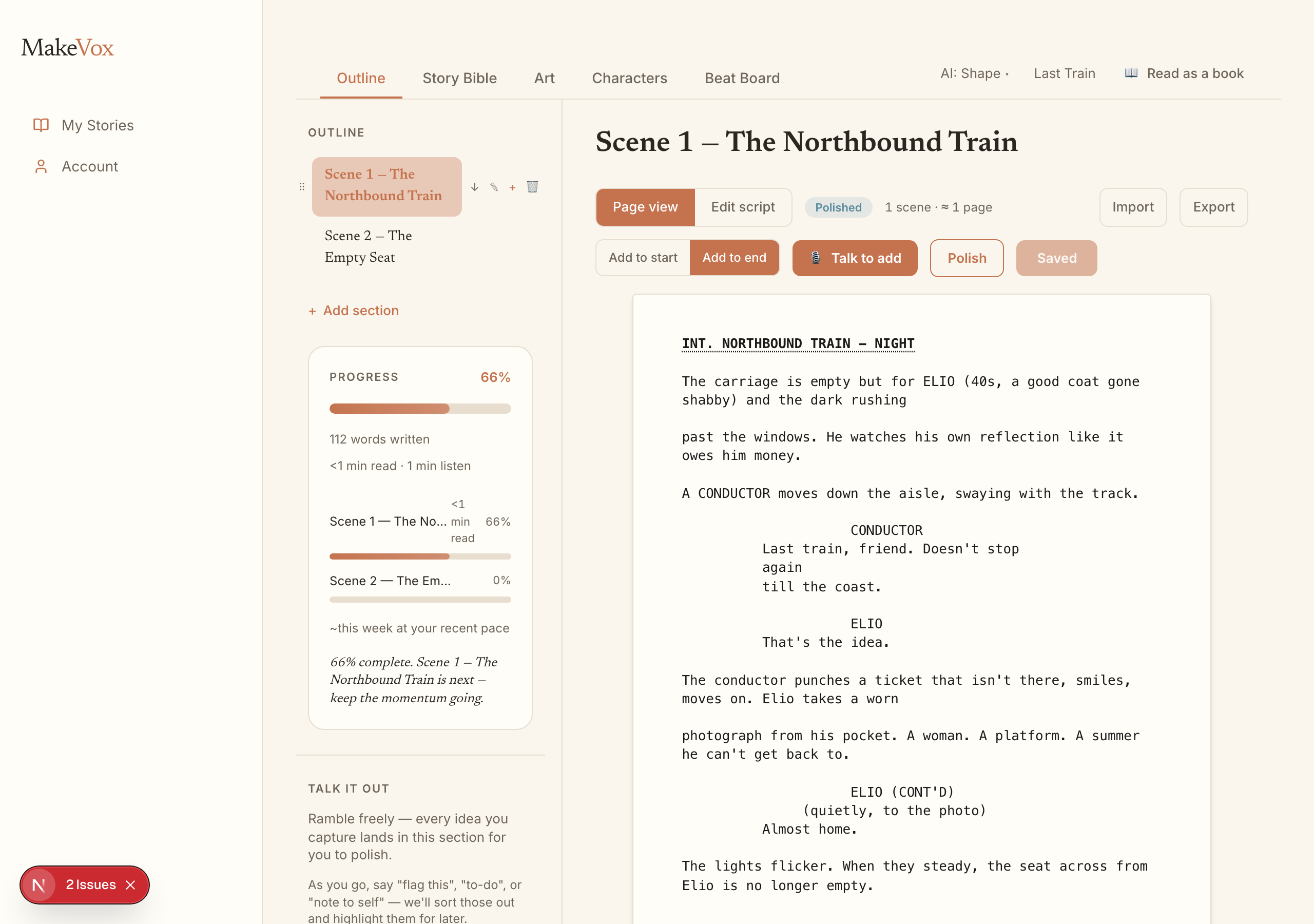
Talk to add a scene
Describe a scene out loud, where it happens, who is there, what they want, and MakeVox lays it into the script. You build the spine of the story by talking through it, scene by scene, without stopping to format anything.
Talk it through, per scene
Each scene has a Talk it through option. Pick a scene, say what you want it to do or where it should go next, and rework it by voice. It is a conversation about that one scene, so you can shape the dialogue and beats until they land.
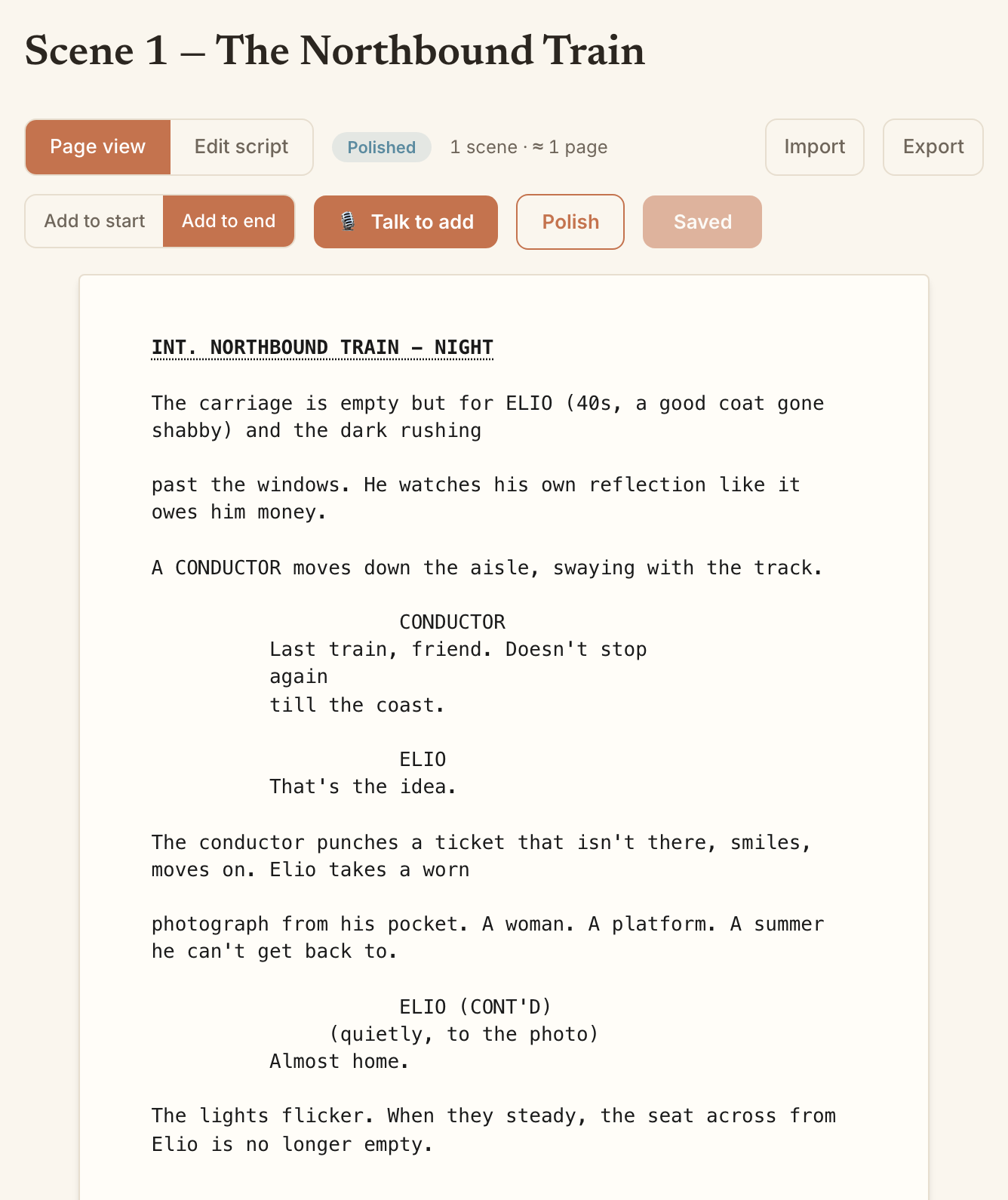
Polish or punch up
When a scene is close but not there, you can ask for a lighter or heavier pass. Polish smooths the existing lines while keeping them yours. Punch up sharpens the dialogue and pacing for more impact. You choose how far to push it.
Pick your professional format
Not writing a film? The Format control at the top of the editor lets you set the script to Screenplay (film), Single-Cam TV, Stage Play, One-Act Stage, or Multi-Cam TV. The whole document reflows to that professional style, on screen and in every export, and switching is non-destructive, so nothing you wrote is rewritten. See Choose your screenplay format for the details.
Import and export
MakeVox speaks Fountain, the plain-text screenplay format, so you can bring in a script you started elsewhere and keep writing by voice. When you're done, the Export menu takes the whole script out as an industry-formatted PDF, an .fdx file, or Fountain, each rendered in the format you chose. Your screenplay is never locked in.
Tip. Already have a draft in another app? Export it to Fountain there, import it here, and keep writing the rest by voice.
Keep reading
Getting started: speak your first chapter
Open MakeVox, hit record, and talk. Your AI editor shapes the rough dictation into clean prose, and your outline grows as you go.
Writing with AIBuild your character bible
Your character bible is the AI's memory of who your people are. Write it or dictate it, and together with your prose it unlocks the Direct setting.
Project typesChoose your screenplay format
Write in the professional style you need, whether film screenplay, stage play, or multi-camera TV, and it lays out and exports that way. Switch anytime; nothing is rewritten.